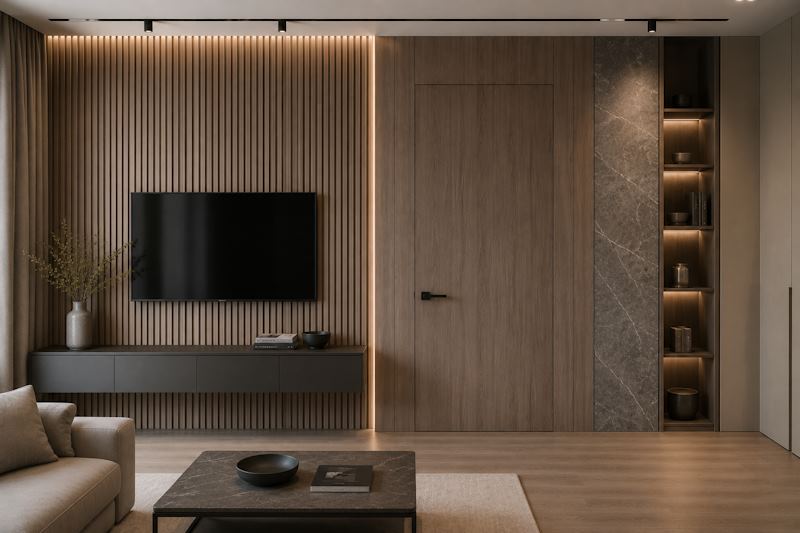
How to Combine Interior Doors, Wall Panels and Furniture in One Style
Beautiful interiors are never created by selecting individual products in isolation. They are the result of thoughtful design, where every element works together to create one harmonious space. Modern architects and interior designers no longer choose doors, furniture and wall finishes separately. Instead, they develop a complete concept in which every detail contributes to the overall atmosphere.
When interior doors, wall panels, furniture, flooring and lighting complement one another, the result feels balanced, elegant and timeless. This integrated approach is one of the defining characteristics of contemporary interior design.
Start with an Overall Design Concept
One of the most common mistakes during renovation is selecting interior doors only after the furniture has already been ordered and the walls have been finished. This often leads to elements that compete with each other instead of working together.
A better approach is to first define the overall interior style, such as:
- Minimalism;
- Contemporary;
- Japandi;
- Luxury Minimal;
- Modern Interior;
- Soft Minimal.
Once the overall concept is established, every design decision becomes much easier.
Matching Colors Is Not Always Necessary
Many homeowners believe that interior doors should exactly match the flooring or furniture. In reality, contemporary design is based on harmony rather than perfect duplication.
Instead of identical finishes, designers often combine complementary materials and tones.
Popular combinations include:
- light oak with warm white finishes;
- walnut with graphite accents;
- natural wood veneer with black metal details;
- painted doors paired with wooden furniture.
Doors and Wall Panels Should Work Together
Modern interiors increasingly treat doors as part of the architecture rather than separate decorative elements. Instead of drawing attention to themselves, doors often blend seamlessly into the surrounding wall.
This is why the following solutions continue to grow in popularity:
- concealed doors;
- Flush door systems;
- painted doors;
- doors integrated into wall panels;
- floor-to-ceiling doors.
The result is a clean, uninterrupted architectural composition.
Furniture Should Complement, Not Copy
Another common mistake is choosing furniture in exactly the same finish as the doors. While this may sound logical, it often makes the interior feel repetitive and flat.
A more sophisticated approach is to combine materials that naturally complement each other. For example, natural oak works beautifully with matte painted cabinetry, while dark veneer pairs perfectly with black metal accents.
Do Not Overlook Door Hardware
Door handles, hinges and locks complete the appearance of every door. Even the most elegant interior door can lose its impact if paired with outdated hardware.
Today's most popular choices include:
- matte black handles;
- magnetic locks;
- concealed hinges;
- minimalist hardware designs;
- satin nickel finishes;
- bronze finishes.
Lighting Brings Materials to Life
Proper lighting dramatically enhances the appearance of doors and wall panels. Linear LED lighting, concealed illumination and carefully positioned accent lights reveal the texture of natural wood, decorative surfaces and architectural wall panels, adding depth and atmosphere to the interior.
Fewer Materials Create Better Interiors
One of the principles of contemporary interior design is restraint. Rather than combining numerous finishes, designers typically limit themselves to two or three primary materials and repeat them throughout the space.
A timeless combination might include:
- natural wood;
- painted surfaces;
- black architectural metal.
This balanced palette creates interiors that feel elegant without becoming visually overwhelming.
Design the Entire Space, Not Individual Products
The most successful interiors are created when doors, wall panels, furniture, flooring and lighting are considered together from the very beginning of the project. Every element supports the others, resulting in spaces that feel carefully designed rather than simply furnished.
DreamDoors – Complete Interior Solutions
DreamDoors creates more than interior doors. Our collections include concealed doors, Flush systems, floor-to-ceiling doors, wall panels and premium architectural hardware designed to work together as one cohesive system. With custom manufacturing and carefully coordinated finishes, we help architects, designers and homeowners create interiors where every detail contributes to a unified architectural vision.
0 reviews