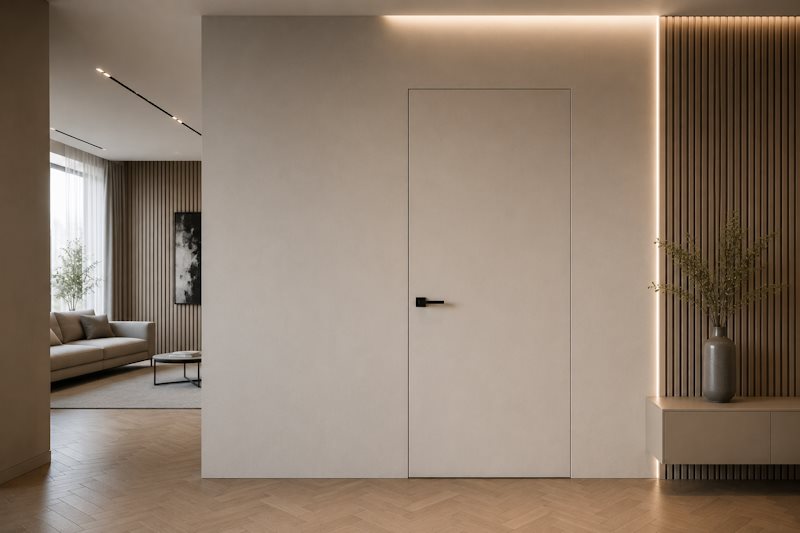
Concealed Doors: Are They Worth Choosing in 2026?
Concealed doors are no longer reserved for luxury architectural projects. Today they have become one of the defining features of contemporary interior design, appearing in apartments, private homes, offices and commercial spaces around the world. Their growing popularity comes from a simple idea: when doors blend seamlessly into the walls, the entire interior feels cleaner, calmer and more sophisticated.
However, concealed doors are much more than frameless-looking door leaves. They are complete architectural systems that require careful planning, professional installation and the right hardware. Before choosing this solution, it is worth understanding where concealed doors truly offer advantages and when traditional door systems may be a better choice.
What Are Concealed Doors?
A concealed door is installed using a specially engineered aluminum frame that is integrated directly into the wall. Unlike traditional door frames, it has no visible architraves or trims, allowing the door to become almost invisible once the wall is finished.
The door leaf itself can be painted to match the wall, finished with natural veneer, decorative panels, mirrors or other materials depending on the interior concept.
Why Have Concealed Doors Become So Popular?
Modern architecture increasingly favors simplicity over decoration. Clean lines, uninterrupted wall surfaces and minimalist detailing have become the foundation of contemporary interiors. Concealed doors perfectly support this design philosophy by removing unnecessary visual elements and allowing walls to remain continuous.
They are especially popular in interiors inspired by:
- Minimalism;
- Contemporary;
- Japandi;
- Soft Minimal;
- Luxury Minimal;
- Hidden Architecture;
- Modern Interior.
The Advantages of Concealed Doors
The biggest advantage of concealed doors is their ability to visually simplify an interior. Instead of drawing attention to themselves, they become part of the architecture.
- clean, uninterrupted wall surfaces;
- no visible trims or architraves;
- can be painted to match the wall;
- ideal for full-height door installations;
- perfectly compatible with wall panels;
- excellent for contemporary homes;
- minimalist architectural appearance.
What Should You Consider Before Choosing Them?
Although concealed doors offer significant aesthetic benefits, they also require careful planning. The concealed frame must normally be installed before the walls receive their final finish, making these systems best suited to new construction or complete renovations.
Installation quality is equally important. Precise alignment is essential to achieve the narrow gaps and clean lines that make concealed doors so distinctive.
Things to consider include:
- proper wall preparation;
- early installation during construction;
- accurate frame alignment;
- door opening direction;
- slightly higher overall investment than standard doors.
When Are Concealed Doors the Best Choice?
Concealed doors are an excellent solution for homeowners who appreciate contemporary architecture and minimalist interiors. They work particularly well in living rooms, bedrooms, hallways, home offices and walk-in wardrobes where uninterrupted wall surfaces create a more spacious atmosphere.
They are also the preferred option when combining doors with painted walls, architectural wall panels or full-height installations.
When Traditional Doors May Be Better
Concealed doors are not the right solution for every project. Traditional interior doors remain an excellent choice for classic interiors, neoclassical architecture and spaces where decorative trims form part of the design language.
They can also be a more practical option when renovation work has already been completed or when project budgets are more limited.
Concealed Door Trends in 2026
Today's concealed doors are evolving beyond simple hidden installations. Architects increasingly integrate them into complete interior compositions where walls, doors, lighting and furniture work together as one continuous architectural element.
The most popular solutions include:
- paint-ready concealed doors;
- full-height concealed doors;
- Flush door systems;
- Reverse opening doors;
- matte black concealed doors;
- concealed doors with glass or mirror inserts;
- doors integrated into wall panel systems.
What to Decide Before Ordering
Before purchasing concealed doors, several technical decisions should be made to ensure smooth installation and the best visual result.
- door opening direction;
- wall thickness;
- rough opening dimensions;
- door height;
- surface finish;
- wall panel integration;
- hardware selection.
Are Concealed Doors Worth It in 2026?
For anyone creating a contemporary interior with clean architectural lines, the answer is yes. Concealed doors remain one of the strongest design features available today, offering timeless elegance and a level of visual simplicity that traditional doors cannot achieve.
The key is to treat them as an architectural system rather than simply another interior door. With proper planning and professional installation, concealed doors become an investment that continues to enhance the appearance and functionality of an interior for many years.
DreamDoors Concealed Doors – Where Architecture Begins with the Details
DreamDoors manufactures concealed door systems for apartments, private homes, offices and premium architectural projects. Custom sizes, full-height doors, Flush systems, Reverse opening solutions and a wide range of finishes—including paint, natural veneer, glass and wall panel integration—allow every project to achieve a seamless, contemporary appearance.
Because the best interiors are built around details that feel effortless.
0 reviews